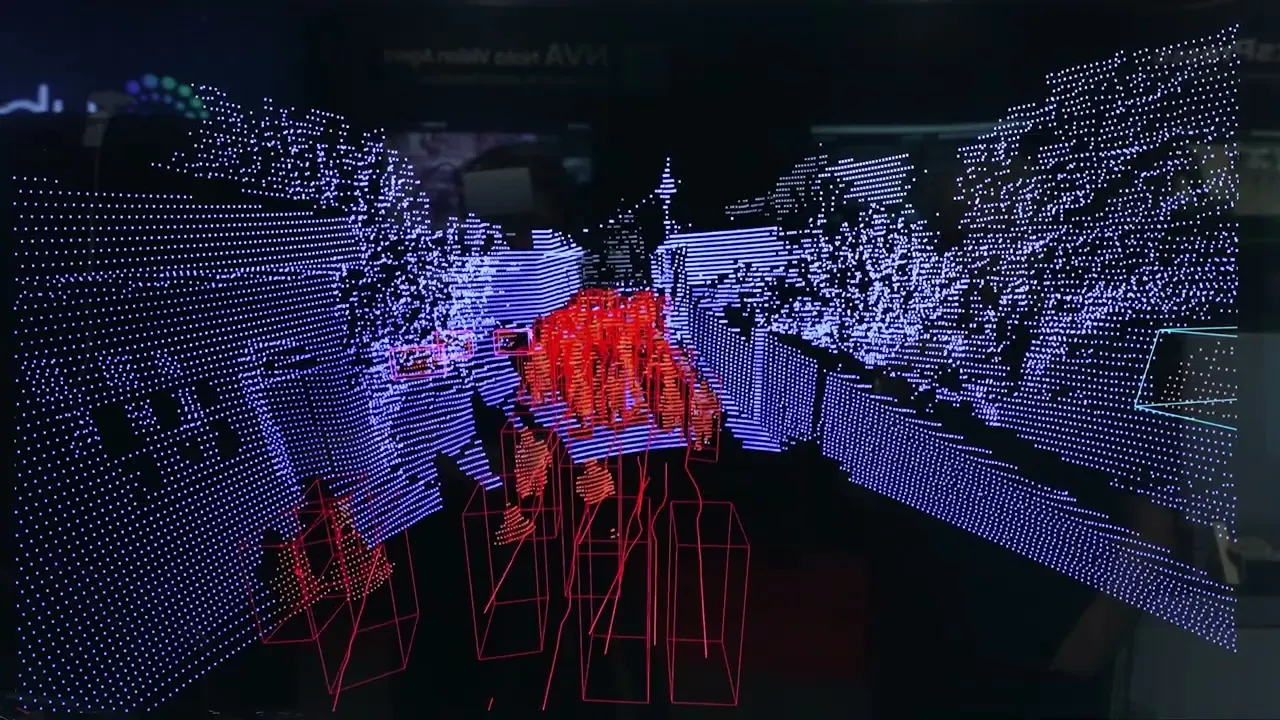

At the 2026 Embedded Vision Summit, three demonstrations showcased how edge AI is becoming more intelligent, more contextual, and more capable of interacting with both people and physical environments. Together, they illustrate a future where AI serves as an active collaborator rather than a passive tool.
Pulling Back the Curtain on a Smarter, More Connected AI Future
While individual applications are exciting, the broader transformation happening across the AI landscape may be even more significant.
Boston AI CEO Peter Winston explored the technologies and trends driving the next generation of intelligent systems. His message was clear: AI is evolving beyond task automation and becoming a more capable, collaborative partner within organizations and connected ecosystems.
Several key trends are accelerating this shift:
Multimodal Intelligence
Future AI systems will combine vision, language, audio, sensor data, and spatial information to build a richer understanding of the world around them. This allows AI to reason more effectively and respond with greater context.
Edge-First Processing
Processing data where it is generated reduces latency, improves responsiveness, enhances privacy, and lowers infrastructure costs. As AI applications become more sophisticated, edge computing will play an increasingly important role.
Intelligent Agents
AI systems are becoming more autonomous and capable of planning, reasoning, and collaborating with users across complex workflows. Rather than acting as isolated tools, they are beginning to function as active participants within organizations.
Human-Centered Experiences
The most successful AI systems will be those that interact naturally with people—seeing, listening, understanding, and responding in ways that feel intuitive rather than technical.
AI Machine Vision with LiDAR Precision
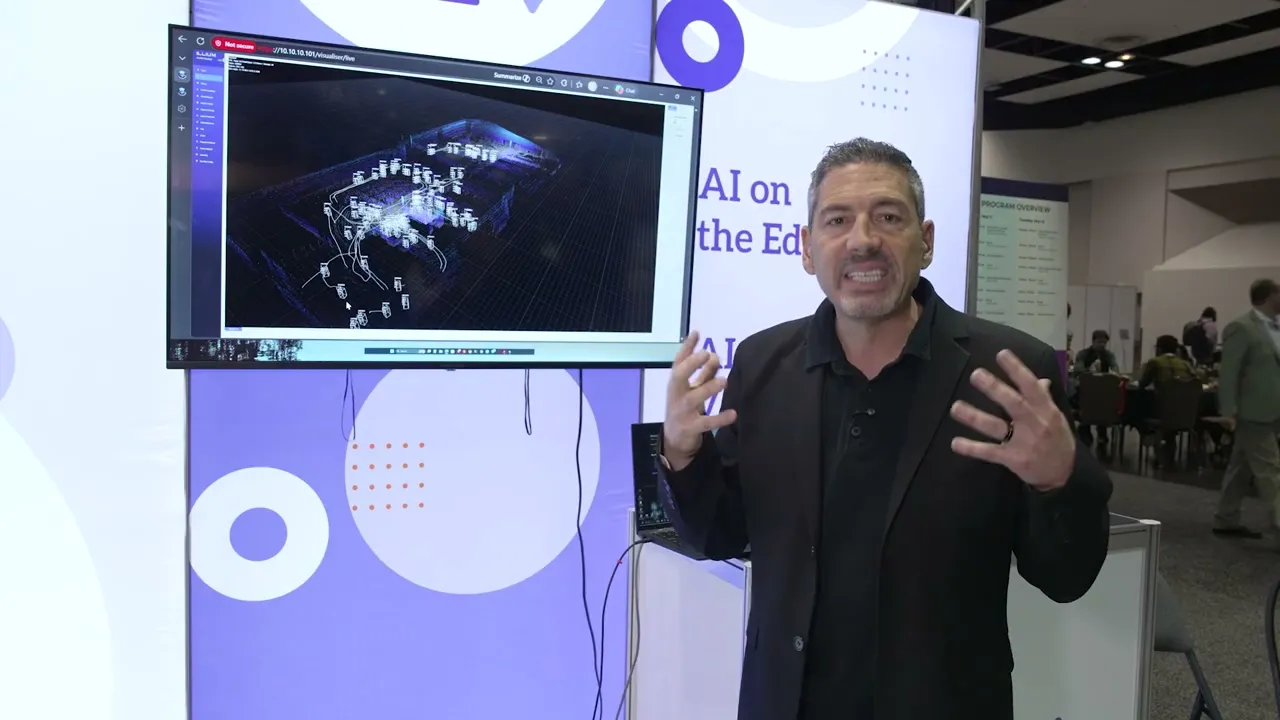
The physical world is inherently three-dimensional, yet many AI systems still rely primarily on camera-based perception. To truly understand an environment, intelligent systems must be able to see depth, distance, and spatial relationships in real time.
Boston AI demonstrated a platform that combines camera data and LiDAR sensing directly at the edge. By fusing these inputs, the system delivers precise spatial awareness without requiring heavy cloud processing or large-scale data transfers. Operators can visualize environments, interact with live sensor data, and even leverage an integrated AI agent to gain deeper insights into what the system is observing.
Why It Matters
Combining vision and LiDAR enables:
More accurate object and scene understanding
Real-time spatial intelligence
Reduced latency through edge processing
Improved privacy by keeping data local
Better decision-making for industrial, retail, logistics, and smart city applications
As AI increasingly moves into the physical world, multimodal sensing will become a critical foundation for reliable perception and autonomous decision-making.
Insight Mirror: AI That Sees, Understands, and Responds
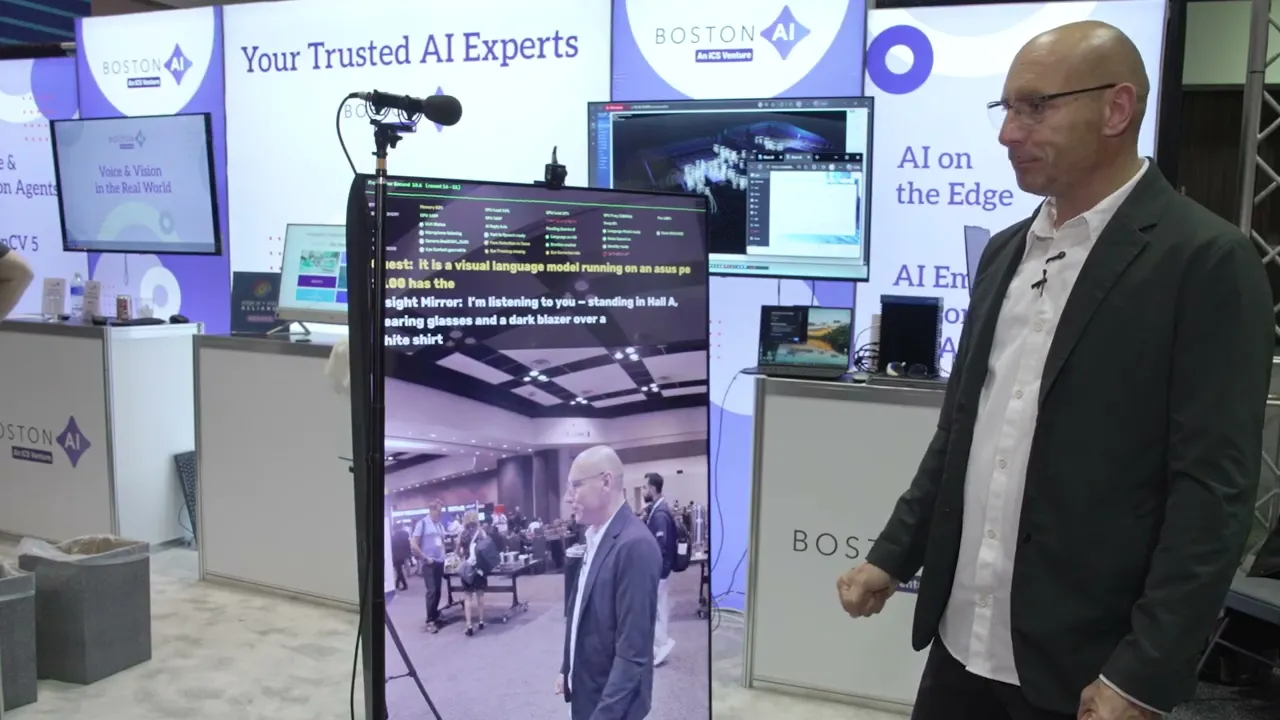
What happens when a mirror becomes an intelligent companion?
The Insight Mirror demonstrates how AI can transform everyday interactions into personalized, context-aware experiences. More than a digital display, the mirror combines computer vision, voice interaction, and AI reasoning to create a system capable of understanding who is present, recognizing objects and activities, and engaging in natural conversation.
Built around a high-performance C++20 application, the platform supports dynamic voice-first interactions, open-vocabulary visual recognition, and presence-aware engagement. The result is an experience that feels remarkably natural—one that adapts to users and responds based on what it sees and hears.
Potential Applications
Retail customer engagement
Smart environments
Hospitality experiences
Healthcare interactions
Personalized digital assistants
Interactive kiosks and displays
The Insight Mirror offers a glimpse into a future where AI interfaces are no longer confined to screens and keyboards. Instead, they become ambient, intuitive, and seamlessly integrated into our daily environments.